
Stop Waiting for Permission to Choose Yourself
Why the places that didn't choose you were never meant to save you


I drove past my old workplace recently.
Three year since I’d walked out. I quit without a backup plan.
And there it was again—that familiar feeling in my chest. The one that whispers. You weren’t good enough. That’s why they didn’t fight for you.
I wasn’t even planning to drive that route. But there I was, grumbling through my errands, taking the shortcut that happened to go right past the building where I’d spent nearly a decade of my life.
The building looked exactly the same. Nothing had changed on the outside.
But I had changed. And somehow, driving past it still brought up all the old questions.
The Barney Rubble Effect
For most of my life, I’ve been the sidekick.
The person walking in someone else’s shadow. The one who shows up, does the work, stays quiet, and watches others get the spotlight.
I couldn’t see my own worth—even when I had a decade of experience, the degree, the skills. Even when I could do things the person who replaced me couldn’t.
None of it mattered.
Management had already decided I wasn’t worth the trouble of keeping.
The person who took over my position? They had about a year of experience there. No degree. They couldn’t even do most of the physical work that the job required.
But they had something I didn’t. The ability to play the game. To cozy up to the right people. To never challenge, never question, never make waves.
I’ve never been good at that game.
Here’s what really happened at that job.
I had opinions. When I shared them, I got bullied until I agreed with the boss.
I believed in dialogue—that conflict could be a learning opportunity if we’d just sit down and talk. Miscommunications could be cleared up. That everyone could walk away a winner.
My managers? They believed in one winner. Them.
If you didn’t cozy up to the boss, you were on the losing side. I don’t cozy. I just don’t have it in me to perform that kind of compliance theater.
So I did what felt safer. I stopped replying. I went out of my way to avoid conflict.
Which, ironically, created more conflict. Because my silence was seen as insubordination. My refusal to engage in their game was interpreted as defiance.
I was treated like I couldn’t think for myself. Like I was machinery to be used until I broke down, then tossed aside when I was no longer convenient.
Driving past that building, running errands I didn’t want to run, all those old questions came flooding back.
Why didn’t my experience matter?
Why didn’t my value as an employee matter?
Why wasn’t I worth saving?
These weren’t new questions. They were the same ones I’d been asking my whole life, just wearing a different outfit.
The Pattern I Couldn’t See
This wasn’t new.
I’ve wondered about this my whole life. It feels like people give up on me too soon—like with a little conversation, a little clarification, I would have been a success.
But success in their terms always seemed to require me becoming someone I wasn’t.
There was a point in my youth when I felt even God and Jesus had given up on me.
I was looking for them to save me from what felt like evil all around me. I prayed. I waited. I believed that rescue was coming from somewhere outside myself.
Instead, I ended up saving myself.
That path taught me self-reliance. It showed me that I had more strength than I’d given myself credit for. It gave me the courage to eventually walk away from that job—to choose myself even when it meant walking into uncertainty.
I knew I was worth saving. Threatening me with a job I hated was the spark I needed to see the world on my own terms—outside the 9-5 culture that kept telling me who I should be.
But here’s the thing about old wounds. They don’t heal just because you made the right decision.
You can do the brave thing and still carry the doubt.
I had quit. I had chosen to leave. I knew it was right.
But the feeling of unworthiness stayed with me anyway.
It sat in my chest like a stone. It followed me through my days. It whispered in moments when I should have felt free.
As I fell asleep that night after driving past my old workplace, the feeling got stronger instead of weaker.
Like my subconscious was trying to tell me something I wasn’t ready to hear.
The Oracle Card That Changed Everything
The next morning, I woke up with a clarity I hadn’t felt before.
This wasn’t about the job. It was jealousy—jealousy that someone else was getting something I thought I deserved. Jealousy that they had been chosen and I hadn’t.
But underneath that jealousy was something deeper. A question I’d been too afraid to ask. What if I actually deserved better than what I’d been fighting for?
I pulled an oracle card from the deck I use for moments like this. Each card has a quote that usually answers whatever question I’m sitting with.
The quote I pulled stopped me cold:
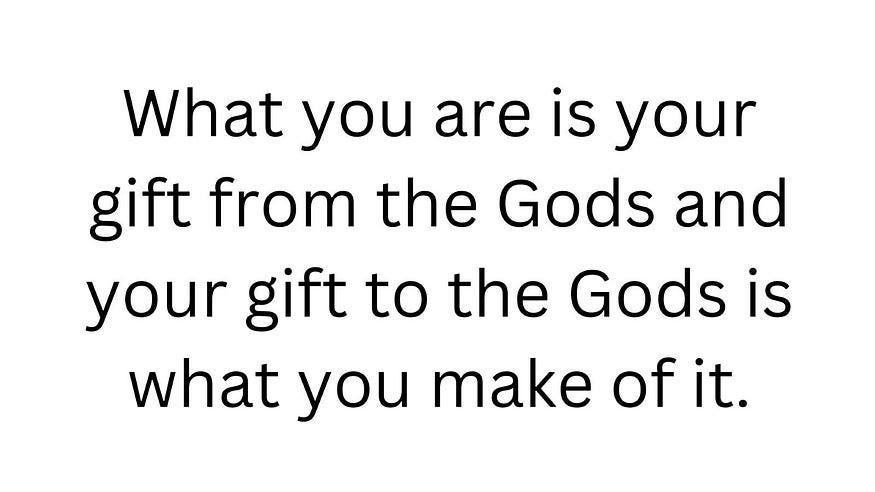
I read it once. Then twice. Then a third time.
I almost fell to my knees in gratitude.
This bumped up my self-worth factor by a thousand. It shifted everything.
Because suddenly, I understood. Staying in that job would have been the real betrayal.
Not of them. Of myself. Of the gifts I’d been given.
What I had done—leaving that job, choosing myself, walking away from a place that diminished me—wasn’t just about survival.
It was sacred.
I was giving back by using the gifts I’d been given. By choosing to honor what was in my heart rather than staying in a place that slowly killed it.
The choices I’d made weren’t just brave. They were right. They were aligned.
All those months of processing the dark and sad feelings—the doubt, the unworthiness, the fear—had led me here. To this moment of knowing, deep in my bones, that I was exactly where I needed to be.
I was on the right path. Deep inside, I’d known it all along.
The oracle card just gave me permission to believe it.
What This Means for You
If you’ve ever felt like you weren’t worth saving—if you’ve stayed in places that dimmed your light because you were afraid no one would fight for you—let me tell you something.
You are worth saving.
And sometimes, you have to be the one who does it.
Not because others didn’t see your value. But because you needed to see it clearly enough to walk away from anything that made you doubt it.
The moment you honor what’s in your heart—when you use your gifts instead of hiding them to make others comfortable—you give back to something greater than yourself.
That’s not selfish. That’s sacred.
There will be days when the old feelings come back. When you drive past the place that didn’t choose you and wonder if you made a mistake.
When you question whether you gave up too easily. Whether you should have tried harder. Whether they were right about you all along.
But here’s what I’ve learned.
The mistake would have been staying.
The mistake would have been shrinking yourself down to fit into someone else’s vision of who you should be.
The mistake would have been dishonoring your gifts—your talents, your perspective, your unique way of seeing and being in the world—just to keep a job that made you feel worthless.
The real answer came when I stopped asking why wasn’t I worth saving and started asking what am I here to give?
That question changes everything.
Because when you’re asking why you weren’t worth saving, you’re giving your power away. You’re letting other people determine your value based on their limited vision of what you should be.
But when you ask what you’re here to give, you reclaim your power. You remember that your worth isn’t determined by who chose you or didn’t choose you. It’s determined by whether you’re honoring what’s alive in you.
Whether you’re using your gifts or burying them to make others comfortable.
Whether you’re living from your truth or performing someone else’s script.
What would change if you saw your courage to leave—or your desire to leave—as a sacred act rather than a failure?
What gifts are you being called to use that you’ve been holding back because someone made you feel like you weren’t good enough?
Sometimes the places that don’t fight for us are doing us the greatest favor. They’re forcing us to choose ourselves when we wouldn’t have had the courage otherwise.
You are worth saving. But sometimes, you have to be the one who does it.

This hit hard. I realized I spent years waiting for someone else to validate my choices, instead of just giving myself that affirmation first. Thank you for that clarity.